
Swarfclean™ Flowline Ditch Magnet
Swarfclean™ Flowline Ditch Magnet
Advanced Magnetic Swarf Separation for Oil & Gas Drilling
“Swarfclean™ is an advanced flowline ditch magnet used in oil & gas drilling to continuously remove fine metal swarf from returning drilling fluid. Installed directly in the flowline or possum belly, it captures harmful ferrous particles in real time without manual handling—improving safety, protecting equipment, and outperforming traditional magnet systems with higher efficiency and built-in swarf data tracking.”
9,000 +
Gauss at rod face
80-90°C
Standard temp rating
<4kg
Weight per rod
<3 min
Full frame cleaning cycle
Technical Specifications
| Magnet Type | N48–N52 NdFeB |
| Field Strength | 9,000+ Gauss |
| Min. Particle Capture | ~50 microns |
| Rod Casing | SS304 Austenitic |
| Standard Temp Rating | 80°C to 90°C (176°F to 194°F) |
| HT Option | 250°C (SmCo magnets) |
| Rod Weight | ~4 kg each |
| Frame Geometry | Any — custom fabricated |
| Cleaning Cycle | <3 min (3-rod frame) |
| Fluid Systems | WBM · OBM · SBM |
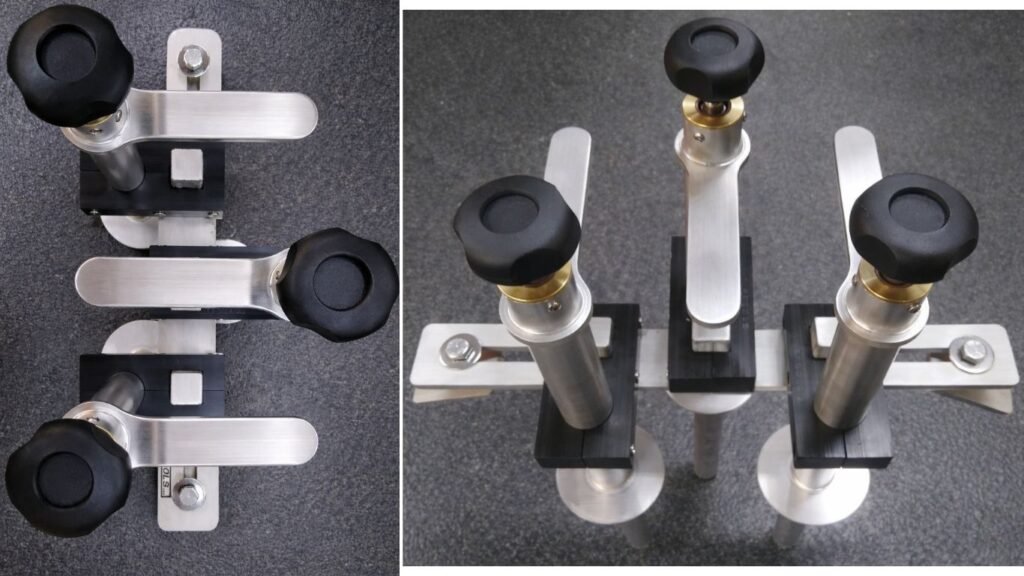
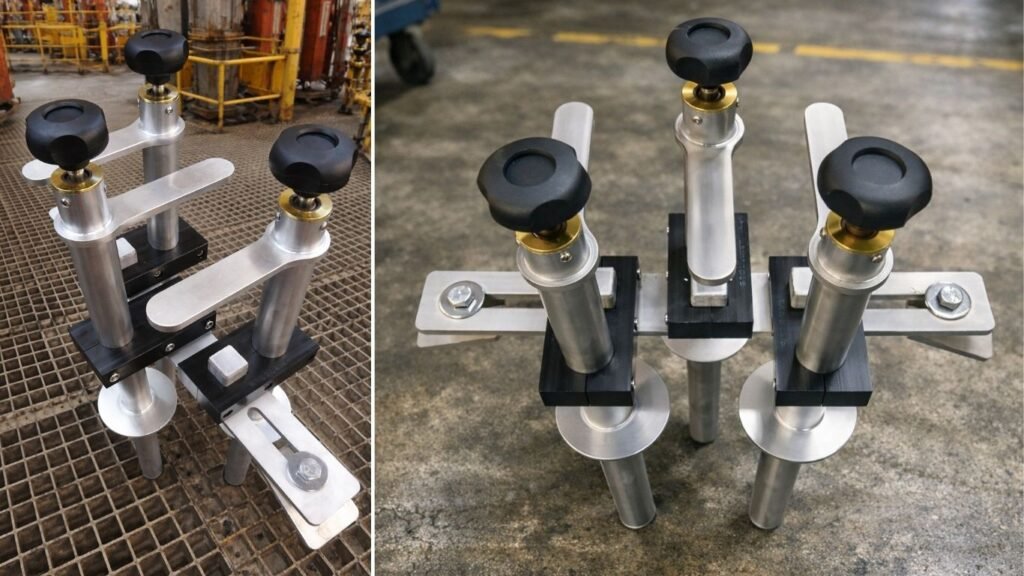
What is the Swarfclean™ Flowline Ditch Magnet?
Product Overview
The Swarfclean™ Flowline Ditch Magnet is a high-performance system that continuously removes iron particles (swarf) from drilling fluid as it returns to the surface. It uses a stainless steel frame fitted with powerful neodymium magnet rods placed across the entire flowline, ensuring all fluid passes through a strong magnetic field.
The rods are easy to remove and clean without direct contact, and the collected swarf is measured and recorded against time and depth, helping track well integrity and drilling performance.
Built in a familiar rod-in-frame design, it fits all flowline types. What makes it different is its stronger magnets (9,000+ Gauss), which capture even very fine particles (down to 50 microns), and its higher temperature rating (up to 90°C), making it reliable in harsh conditions.
Each rod is sealed in corrosion-resistant stainless steel, and the system safely releases collected swarf into a container for weighing and logging—providing valuable data that standard ditch magnets do not offer.
Three Generations of Ditch Magnet Technology
Product Comparison
The market has evolved from Rectangular Block Magnet to modern Neodymium rod systems. Swarfclean™ goes a step further — higher Gauss, higher temperature rating, and the only system with integrated swarf data logging as standard.
| Comparison Factor | Rectangular Block Magnet | Current Market Standard | Swarfclean™ Flowline Ditch Magnet |
|---|---|---|---|
| Magnetic Field Strength | 800–2,500 Gauss (ceramic) | up-to 9,000 Gauss | ✓ 9,000+ Gauss (N48–N52 NdFeB) |
| Fine Particle Capture | ~500 microns and above only | ~100–150 microns | ✓ ~50 microns and above |
| Manual Swarf Contact | Yes — scraping by hand required | ✓ Zero contact (piston/handle discharge) | ✓ Zero contact — handle-actuated rod extraction |
| Rod / Unit Weight | 15–40 kg block (manual lift hazard) | ✓ ~4 kg per rod | ✓ ~4 kg per rod |
| Standard Temperature Rating | 60–80°C (ceramic degrades) | 80°C standard / 150°C HT option | ✓ 80°C to 90°C Standard (176°F to 194°F) |
| Full Cross-Section Coverage | No — floor/wall placement only | ✓ Yes — rod frame spans full channel | ✓ Yes — bespoke frame for any geometry |
| Cleaning Cycle — Full Frame | 5–20 minutes (scraping) | ~5–10 minutes (multiple rods) | ✓ Under 3 minutes (full frame) |
| Swarf Data Logging | None — swarf discarded | Not standardised — no protocol included | ✓ Built-in — weighed, time-stamped, depth-correlated |
| OBM/SBM Compatibility | Poor — surface absorbs mud | ✓ Good — sealed SS casing | ✓ Good — sealed SS304 casing |
| Bespoke Frame Fabrication | No | ✓ Yes | ✓ Yes — all channel geometries |
| Total Cost of Operation | Low CAPEX; high damage, safety, and NPT cost | Good — reduced NPT risk, no data value | ✓ Best TCO — lowest damage risk + data asset |
Why Swarfclean™ Outperforms the Market
Key Advantages
Magnetic Field Strength — 9,000+ Gauss at the Rod Face
N48–N52 grade NdFeB magnets deliver a minimum of 9,000 Gauss at the rod face — 15–20% above the market standard of 9,000+ Gauss.
The result: reliable capture of ferrous particles down to ~50 microns, including the fine fraction that damages pump liners, erodes MWD sensor ports, and biases directional surveys. Lower-strength systems miss this fraction entirely.
Temperature Rating —
80°C to 90°C Standard (176°F to 194°F)
Standard assembly rated to 80°C to 90°C Standard (176°F to 194°F) — a 10°C advantage over the 70°C standard of leading competitors. Above their rated limit, NdFeB magnets permanently lose field strength with each thermal cycle, silently reducing capture performance well by well.
The Swarfclean™ rating eliminates this invisible risk in Middle East, high-temperature onshore, and HPHT environments — no upgrade required. For wells above 80°C, the SmCo rod option extends coverage to 150°C, interchangeable in the same frame.
Reduction in Personnel
Manual Handling
Legacy ceramic block magnets (15–40 kg) required manual lifting against their own magnetic attraction force, with swarf scraped off by hand — a documented cause of pinch injuries, chemical skin exposure, and musculoskeletal strain.
The Swarfclean™ integrated demagnetisation mechanism releases swarf directly into the collection vessel on extraction. Personnel never contact swarf, contaminated mud, or rod surfaces. Safe operation is the only operating mode.
Faster Wellbore Clean-Up —
Reduced Operator Cost
Continuous magnetic separation keeps the active fluid system cleaner across all well phases — not just during milling. Cleaner fluid means less abrasive wear on pumps, fewer liner replacements, and fewer BHA tool failures.
A single avoided pump rebuild on an offshore floater — typically 6+ hours NPT at $150,000/hr plus parts — more than covers the cost of a full Swarfclean™ deployment campaign.
Increased Efficiency —
Fast Tool-Free Cleaning
The integrated cleaning mechanism allows each rod to be extracted, discharged, and reinserted with a single handle motion — no tools, no flowline isolation, no interruption to fluid returns.
A complete 3-rod frame: extracted, discharged, logged, and reinstated in under 3 minutes. Conventional ceramic blocks take 5–20 minutes per clean. Competing rod systems average 5–10 minutes per frame. On a 16-hour milling shift, Swarfclean™ saves 1–3 hours of crew time.
Less Weight —
~4 kg Per Rod
Each rod weighs approximately 4 kg — single-person safe, no mechanical assistance required. This is achieved through N48–N52 grade neodymium magnets, which deliver 12,000+ Gauss from a compact rod geometry without added bulk.
Compare this to legacy ceramic block magnets at 15–40 kg, which required two-person lifts or mechanical handling. One crew member installs the complete frame in under 15 minutes.